glossary
Explained Clearly - Revenue Attribution From Social Media
Every model gets it partly wrong. How revenue attribution from social media works, which model flatters which channel, and how to instrument tracking.
•5 min read
Tips, tutorials, and insights for social media success
Every model gets it partly wrong. How revenue attribution from social media works, which model flatters which channel, and how to instrument tracking.

Some tasks automate cleanly and some never should. Managing social media automation means picking which is which, then protecting the human parts.
Learn what social media branding is, why it matters for your business, and actionable strategies to build a consistent, recognizable brand across platforms.
Content, ads, software, and salaries all land in the same line item. How to size a social media budget and split it sensibly across channels.
Learn what social media business intelligence is, how to leverage social data for strategic decisions, and tools to turn social insights into action.
Advertising disclosure, data privacy, and record-keeping all apply. Where compliance and social media intersect, and how to build a workable framework.
Likes, tags, and UGC submissions in exchange for a prize. What running social media competitions takes, from entry mechanics to measuring the result.
A viral complaint, a recall, or a breach all move at feed speed. Crisis management through social media, from risk mapping to that first response.
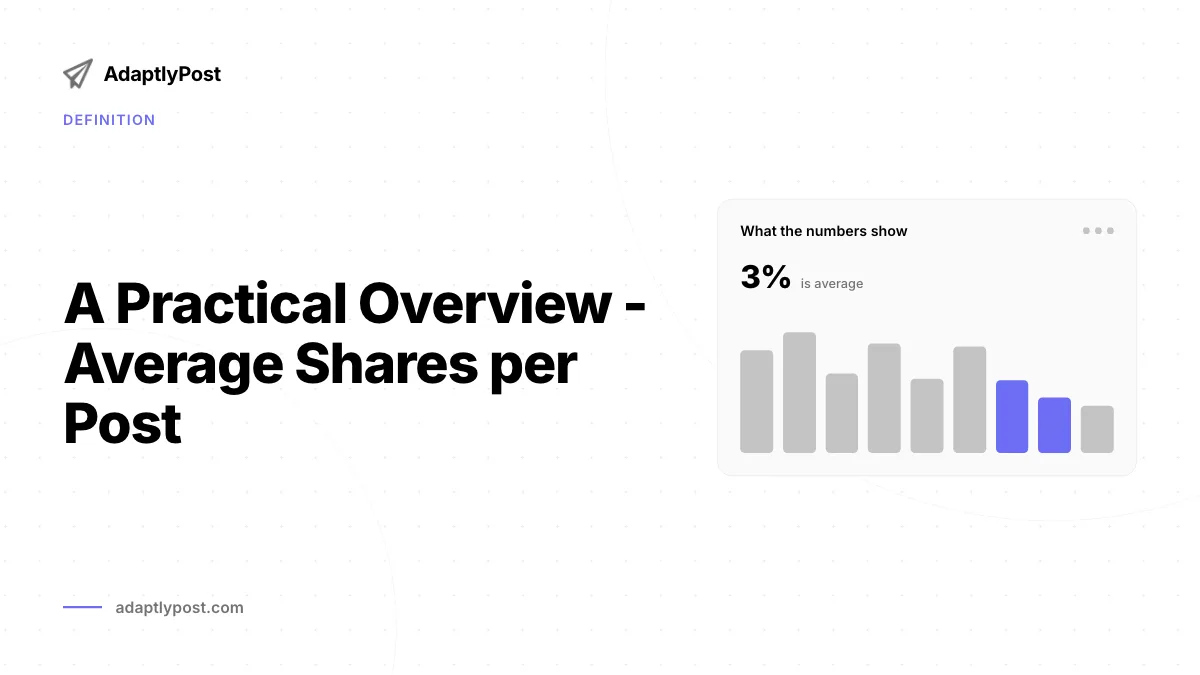
Engagement rate divides interactions by followers or by reach. Where average shares per post sits in that formula, plus benchmarks by industry.
The name after the @ is how people tag, find, and mention you. What a social media handle is, why it shapes brand recall, and how to choose one that lasts.
Learn what social media KPIs are, which ones matter most for your goals, how to set them, and how to use them to improve your social strategy.
Monitoring counts mentions; social media listening reads the conversation behind them. Tool selection, keyword setup, cadence, and turning signal into action.
Specific, measurable, and tied to business outcomes. How to write social media objectives and goals using the SMART framework, with worked examples.
Strategy, platform choice, content, and measurement. What social media marketing includes, which parts to build first, and how results get proved.
Learn what social media metrics are, which ones to track for your goals, and how to use metric data to improve your social media performance.
SMO borrows from SEO but scores differently. Which levers social media optimization pulls across profiles, content, and posting rhythm, and in what order.
These updates surface in Search and Maps at the moment somebody looks. What Google business profile social media posts can carry, and when they expire.
Reach counts each person once. How organic, paid, and post viral reach differ from impressions, and the tactics that reliably widen each of the three.
Value generated set against resources invested. How return on investment for social media is calculated, which metrics feed it, and how to report it.
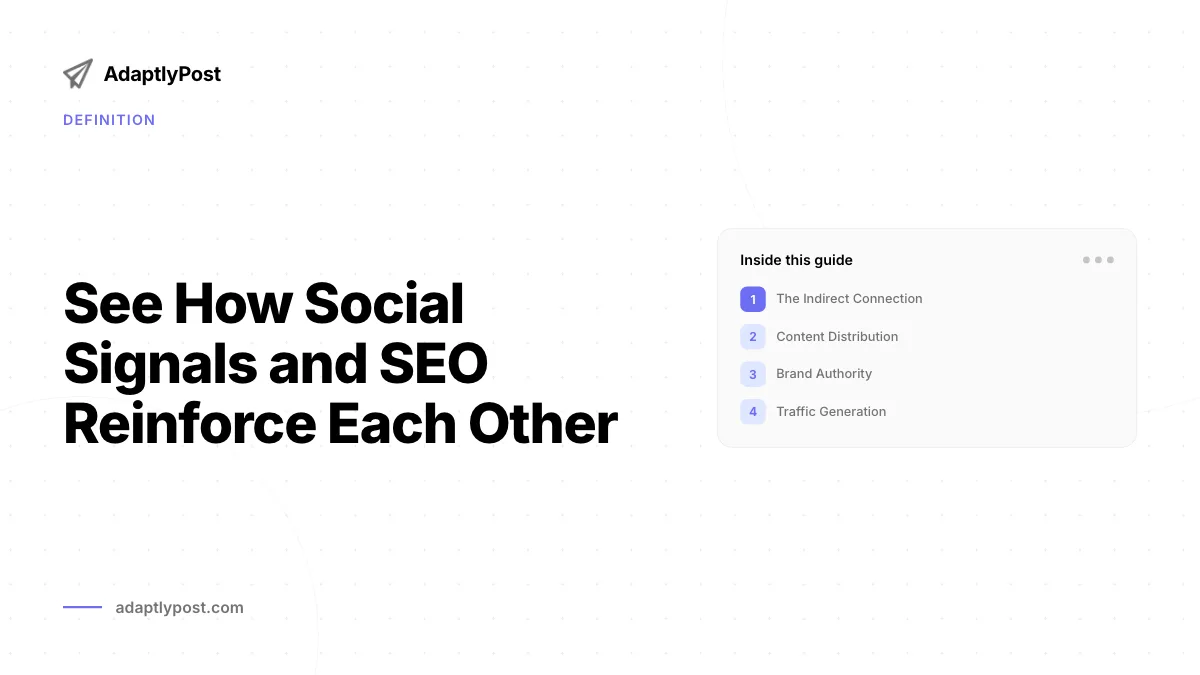
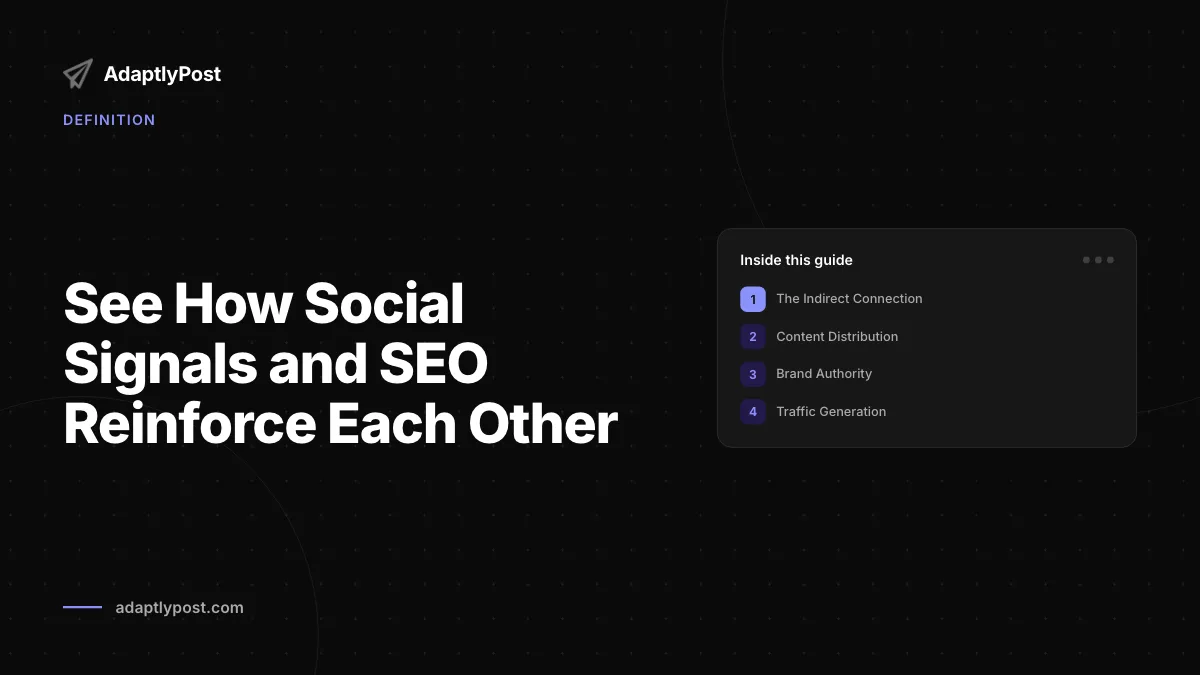
Likes are not a ranking factor, yet social signals and SEO still connect through links, brand search, and discovery. What genuinely influences rankings.
Goals first, then audience, pillars, cadence, and measurement. How do you organize a social media strategy people can actually follow week to week?
Algorithms weigh the first hour heavily. How social media timing affects distribution, the general windows per platform, and how to find your own.
Sorted by job, social media tools fall into five groups: scheduling, analytics, design, listening, inbox. Which three a small team needs, and what overlaps.
Understand the social network definition, how social networks work, the major platforms, and why they are essential for modern marketing strategies.
Short for sponsored content, and regulated. What sponcon covers, when disclosure becomes mandatory, and what brands and creators each owe the audience.
Short for subliminal tweet, and no longer confined to Twitter. The subtweet meaning, how to spot one, and whether responding is ever worth it.
A target demographic is more than age and gender. How to read customer data and platform analytics into target area profiles that guide what you publish.
Short for 'to be fair', the TBF meaning signals a balanced counterpoint. How it reads on social, when it lands well, and how it differs from IMO and NGL.

Text on a slide fails on contrast before it fails on wording. Instagram carousel text readability best practices, plus accessibility guidance.
Short for that feeling when, the TFW meaning sets up a relatable moment. How it reads on X, Instagram, TikTok, and Reddit, and how it differs from MFW.
Learn what thought leadership means, why it matters for brands and professionals, and actionable strategies for building authority on social media.
Learn what through channel marketing is, how it works, implementation strategies, and best practices for scaling your brand reach through partners.
Four tools shelter under one umbrella. What the TikTok Business Suite actually includes, who can access it, and which parts a small brand genuinely needs.
A TikTok Business account adds analytics, ad tools, and commercial audio while limiting trending sounds. Setup steps, and how it compares to Creator.

Weigh the TikTok Creator Fund requirements and alternatives before applying: eligibility thresholds, realistic per-view earnings, and programs that pay more.
Stripped down for cheap data and older phones, TikTok Lite drops effects and filters. Where it is available, what it loses, and what that means for reach.
Learn how to build a TikTok marketing strategy that drives results. Covers content creation, advertising, influencer partnerships, and best practices.
Views drop, hashtags stop working, the For You page goes quiet. What a TikTok shadowban is, how to confirm one, and the recovery steps that hold up.
Connecting a catalog turns videos and live streams into a checkout. Eligibility, seller registration, product setup, and the fulfillment rules sellers miss.
Once literally chronological, the timeline meaning social media uses today is algorithmic. How feeds differ by platform, and what that changes for reach.
Credibility is assembled, not claimed. The trust & quality signals that move a hesitant buyer, and where to place them on a profile or landing page.
Context decides the TS meaning you are looking at, not the letters. The common readings, how to tell them apart by platform and tone, and when to just ask.
Short for talk to me, the TTM slang meaning is an open invitation. How it reads by platform, when it turns confrontational, and the similar abbreviations.
TW and CW meaning warning labels sit ahead of difficult content so readers can opt out. Where to place them, how to format, and which topics warrant one.
Threads, Bluesky, Mastodon and more: the Twitter alternatives compared on audience size, moderation, and reach, so you pick one your followers will join.
Screen views, not clicks. What sits behind every Twitter impressions list, how it differs from reach, and five levers that reliably move the number.
Being ratioed means replies beat likes. Where the typical like to view ratio on Twitter X usually sits, and what tips a post into open backlash.
Networks, media sharing, forums, messaging, live video: the types of social media split into nine categories, each suiting a different audience and plan.
Nothing visible, which is the short version of what happens when you unfollow someone on Facebook. Feed effects, friend status, and unfollow vs unfriend.

Signups mean nothing until the first real action. What user activation measures, how to define that moment for your product, and how to shorten the path.