
TL;DR, Quick Answer
13 min readYou do **not** need 1,000 subscribers to livestream on YouTube. That number is outdated.
This guide answers the question: Can you livestream on YouTube without subscribers. The idea that you need 1,000 subscribers to go live on YouTube is completely outdated. YouTube reduced the mobile streaming threshold to just 50 subscribers, and if you're broadcasting from a desktop, there's no subscriber minimum whatsoever -- even a fresh channel with zero followers can start streaming immediately.
In this guide, we walk through all the available streaming options for 2026: using a webcam directly in YouTube Studio, setting up encoder software such as OBS, leveraging browser-based platforms, and using third-party mobile apps to sidestep the 50-subscriber mobile restriction. We also address updated age requirements, concurrent viewer limitations for smaller channels, and a practical roadmap toward monetization.
2026 YouTube Livestream Requirements Overview
Let's start with a straightforward comparison of what's actually needed for each streaming approach.
| Streaming Method | Minimum Subscribers | Age Minimum | Notable Restriction |
|---|---|---|---|
| Desktop (YouTube Studio Webcam) | None | 16+ (solo) | Cannot add overlays or share screen |
| Desktop (Encoder, e.g. OBS) | None | 16+ (solo) | Software configuration required |
| Mobile (Official YouTube App) | 50 (18+ only) | 18+ | Replays default to Private below 1,000 subs |
| Mobile (Third-Party Encoder) | None | 16+ (solo) | Must configure RTMP stream key |
| Browser Platform (StreamYard, Restream) | None | 16+ (solo) | Free tiers include watermarks and 720p limit |
Regardless of which method you choose, three universal prerequisites apply:
- Phone number verification is mandatory for your channel.
- A 24-hour waiting period must pass after your initial verification.
- No active Community Guidelines strikes can exist on your account from the previous 90 days.
The bottom line: to stream immediately with no subscribers, use a desktop computer. To go live from your phone without any subscribers, a third-party encoder app like Streamlabs is the way to go (details below).
Preparing to Stream: Verification and Account Setup
YouTube has a few required setup steps before you're allowed to broadcast. Handle these ahead of time so there's no delay when you're ready to go live.
Step 1: Phone Number Verification
This step is non-negotiable -- YouTube uses it to confirm you're a real person.
- Navigate to youtube.com/verify while signed into your Google account.
- Pick your country and select either text message or voice call for the verification code.
- Input your phone number and hit "Get Code."
- Enter the 6-digit verification code when it arrives.
Completing this step also enables uploads over 15 minutes and custom thumbnail uploads.
Step 2: The 24-Hour Waiting Period
YouTube enforces a one-time 24-hour delay after verification before streaming access turns on. There's no shortcut around this.
After that initial wait, you can go live whenever you want without any additional delays. If you have a specific stream date in mind, make sure to verify your channel at least one day before.
Step 3: Keep Your Channel in Good Standing
YouTube's strike system can block your ability to stream:
| Strike | Consequence | How Long It Lasts |
|---|---|---|
| First | One-week suspension from uploads, streams, and posts | Stays on record 90 days |
| Second | Two-week suspension from the same activities | Stays on record 90 days |
| Third (within 90 days of first) | Permanent channel termination | Permanent |
Verify your standing by visiting YouTube Studio and checking the "Channel violations" section on your dashboard.
Schedule your content across all platforms
Manage all your social media accounts in one place with AdaptlyPost.
All-platform analytics

AdaptlyPost
Start 7-Day FREE Trial
All-platform analytics
Social Inbox
AI-powered assistant
Social Inbox
AI-powered assistant
Method 1: Desktop Webcam Streaming via YouTube Studio
This is the most straightforward approach to livestreaming. No additional software is needed, and there's no subscriber threshold. All you need is a computer with a webcam.
Ideal for: Q&A sessions, informal chats, announcements, and anyone streaming for the first time.
Step-by-step process:
- Head to YouTube Studio and click the "Create" button at the top right.
- Choose "Go Live" from the dropdown.
- Select the "Webcam" option from the left panel.
- Enter your stream title, description, and category. Write descriptive, keyword-rich titles -- something like "Live Q&A: Getting Started with Photography" works much better than "My First Stream."
- For your initial stream, set visibility to Unlisted so you can test everything privately.
- Add a custom thumbnail -- this helps when people find your stream replay in search.
- Hit "Go Live" to begin your broadcast.
What you can't do: The built-in webcam option is purposely minimal. Screen sharing, overlays, camera switching, and custom graphics aren't available. You'll need an encoder for those capabilities.
2026 Addition -- Practice Mode: YouTube now offers a rehearsal feature where you can start a stream privately, verify your setup, and then switch to a public broadcast with a single click. This removes the worry of accidentally going live during setup.
Method 2: Using OBS Studio for Professional-Quality Streams (Free)
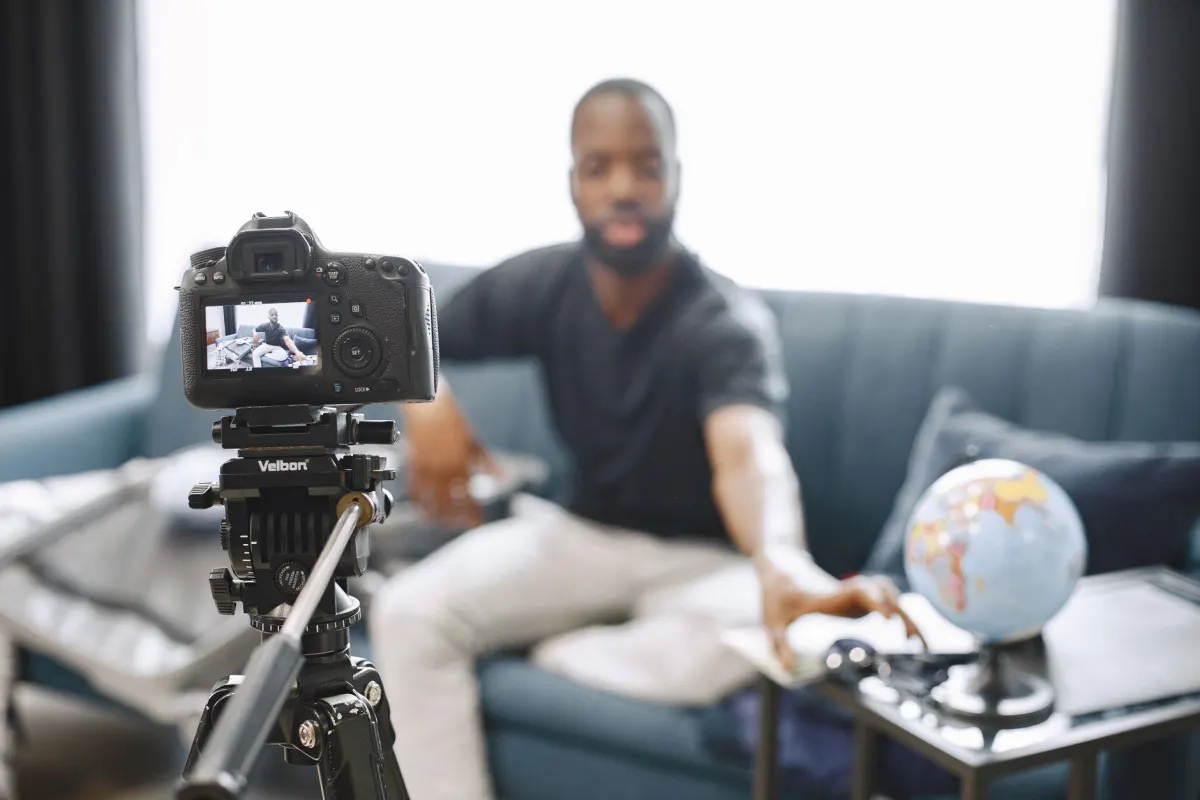
When you need screen sharing, graphic overlays, multiple camera angles, or any level of production polish, encoder software is essential. An encoder combines your audio and video inputs into one stream and transmits it to YouTube.
OBS Studio (Open Broadcaster Software) remains the go-to choice. It's completely free, open-source, and powers everything from solo creators to major esports productions.
Ideal for: Gaming, tutorials, screen-sharing presentations, and multi-camera productions.
Setup instructions:
- Get OBS Studio from obsproject.com. Version 32 updated the default streaming bitrate from 2,500 to 6,000 Kbps to reflect current quality expectations.
- In YouTube Studio, navigate to the "Go Live" area and pick the "Stream" tab (not Webcam).
- YouTube generates a unique stream key -- this private code links OBS to your channel. Keep this key confidential.
- Copy the key.
- In OBS, open Settings > Stream, choose "YouTube - RTMPS" as the service, and paste your stream key.
- Add your video and audio Sources in the bottom panel of OBS: webcam feed, display capture, images, text, etc.
- Press "Start Streaming" in OBS to begin sending your feed to YouTube.
- Return to YouTube Studio and click "Go Live" to make everything public.
Suggested encoding settings:
| Resolution | Bitrate Range | Minimum Upload Speed |
|---|---|---|
| 720p @ 30fps | 2,500-4,000 Kbps | 5+ Mbps |
| 1080p @ 30fps | 4,500-6,000 Kbps | 8+ Mbps |
| 1080p @ 60fps | 6,000-9,000 Kbps | 10+ Mbps |
Select CBR (Constant Bitrate) for rate control. If your system has an NVIDIA, AMD, or Apple Silicon GPU, take advantage of hardware encoding (NVENC, AMF, or VideoToolbox) to offload work from your CPU.
Test your connection at Speedtest.net. As a rule, keep your streaming bitrate below 80% of your available upload bandwidth.
AdaptlyPost
Start 7-Day FREE Trial
All-platform analytics
Social Inbox
AI-powered assistant
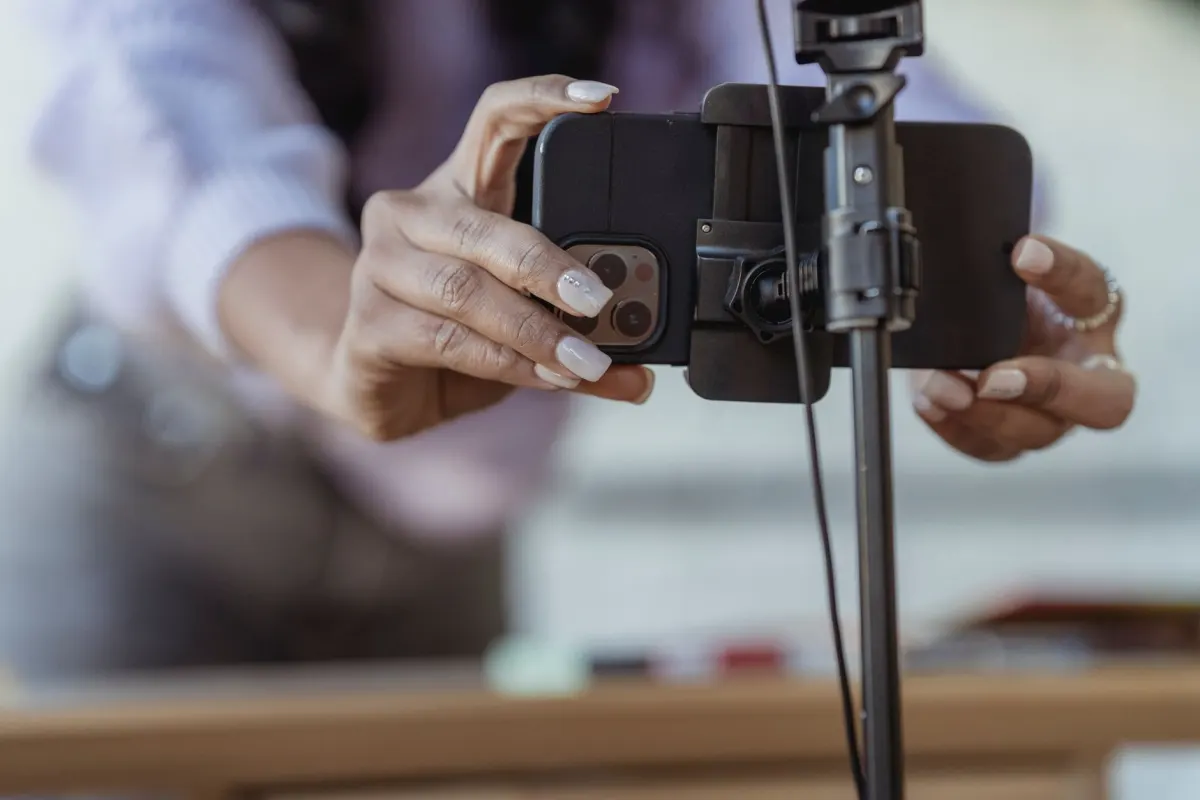
Method 3: Going Live From Your Phone With No Subscribers (Third-Party Apps)
Here's what most streaming guides overlook. The official YouTube mobile app demands 50 subscribers and requires you to be 18+. However, third-party encoder apps use RTMP stream keys -- the exact same protocol OBS uses -- to connect to YouTube. Because YouTube classifies these as encoder streams rather than mobile app streams, the 50-subscriber rule does not apply.
This means you can broadcast from your phone even with a brand-new, zero-subscriber channel.
Streamlabs Mobile (iOS and Android) -- Top Pick
Streamlabs leads the mobile streaming space. It supports on-screen alerts, custom overlays, graphics, and connects to YouTube, Twitch, TikTok, Facebook, and other platforms.
Getting started:
- Install Streamlabs from the App Store or Google Play.
- Launch the app and log in with your Google/YouTube credentials.
- If you have under 50 subscribers and the app can't automatically set up a stream, open YouTube Studio in your phone's browser, schedule a stream manually, and copy the RTMP stream key.
- Paste the key into Streamlabs under the custom RTMP configuration.
- Set up your camera, microphone, and any overlays.
- Hit "Go Live."
PRISM Live Studio (iOS and Android) -- Best for Creative Features
PRISM Live Studio from NAVER offers a free experience with built-in visual filters, effects, and even a VTuber mode with motion tracking.
- The free tier handles basic YouTube streaming
- PRISM Plus ($9.99/month) unlocks simultaneous streaming to as many as 6 platforms
Additional Mobile Encoder Options
| App | Availability | Strength |
|---|---|---|
| Larix Broadcaster | iOS, Android | Low-overhead IRL streaming |
| CameraFi Live | Android | Feature-rich mobile broadcasts |
| Omlet Arcade | iOS, Android | Mobile gaming broadcasts |
The Browser Method (No App Installation)
You can skip installing any app altogether. Just open YouTube Studio in your phone's browser (Chrome, Safari, etc.). YouTube interprets this as a desktop session, allowing you to use the webcam streaming feature with zero subscribers. It's not as smooth as a dedicated app, but it gets the job done.
Method 4: Browser-Based Studios (StreamYard and Restream)
For creators who find OBS overly complex but need more than YouTube's basic webcam option, browser-based streaming tools hit the sweet spot. They provide professional capabilities -- branded overlays, guest invitations, screen sharing -- all through a web interface.
StreamYard
StreamYard is widely used for podcasts, interviews, and multi-person streams.
| Plan | Monthly Cost | Max Resolution | Simultaneous Destinations | Branding |
|---|---|---|---|---|
| Free | $0 | 720p | 1 | StreamYard watermark |
| Core | $35.99/mo (annual) | 1080p | Multiple | No watermark |
The free tier caps you at 20 hours of streaming monthly with a single destination and includes a watermark. It's fine for getting started, though regular streamers will want to upgrade.
Restream
Restream specializes in multistreaming -- pushing your broadcast to multiple platforms at once.
| Plan | Monthly Cost | Platform Limit | Branding |
|---|---|---|---|
| Free | $0 | 2 platforms | Restream watermark |
| Standard | $16/mo | 3 platforms | No watermark |
For multistreaming on a budget, Restream's free plan edges out StreamYard by supporting 2 simultaneous destinations at no cost. Neither platform requires any minimum subscriber count.
Gear Essentials: What Genuinely Impacts Stream Quality
Expensive equipment isn't necessary to get started, but a few smart investments go a long way.
Prioritize Audio Over Video
Audiences will accept mediocre video, but poor audio causes immediate drop-off. If you can only upgrade one thing, choose a decent microphone. A $30 USB mic dramatically outperforms any built-in laptop microphone.
Getting Your Lighting Right
A ring light is nice but optional. During the day, position yourself facing a window for natural illumination. In the evening, set a desk lamp behind your screen aimed at your face. The one thing to avoid: backlighting from a window behind you, which turns you into a dark silhouette.
Network Stability
Whenever feasible, connect via wired ethernet rather than Wi-Fi. Wireless connections are inherently unpredictable. A steady 1080p stream requires at least 8-10 Mbps of consistent upload speed. Always run a speed test before each broadcast.
AdaptlyPost
Start 7-Day FREE Trial
All-platform analytics
Social Inbox
AI-powered assistant
30-Minute Pre-Stream Checklist
Complete these checks roughly half an hour before going live:
- Audio test. Record a brief clip and listen back for clarity and unwanted background noise.
- Lighting check. Ensure your face is evenly and clearly lit.
- Speed test. Confirm your upload speed exceeds your target bitrate.
- Private test stream. Use Practice Mode or an unlisted broadcast to verify everything end-to-end.
- Close unneeded applications. Free up processing power and bandwidth.
Important Details for Smaller Channels: Auto-Privacy and Viewer Caps
Two lesser-known restrictions affect channels under 1,000 subscribers:
Replays Default to Private
Once your stream wraps up, YouTube automatically changes the replay visibility to Private for channels below 1,000 subscribers. Your recording won't be discoverable unless you manually adjust the setting.
How to fix it: In YouTube Studio, navigate to Content > Live, locate your stream, click "Visibility", and switch to Public or Unlisted.
Possible Concurrent Viewer Limits
Based on creator reports, channels under 1,000 subscribers may experience a soft cap on simultaneous viewers, roughly calculated as your subscriber count plus 25. So a channel with 100 subscribers might peak around 125 concurrent watchers.
YouTube hasn't officially confirmed this formula. The limitation seems to mainly impact mobile app streams and disappears once you surpass 1,000 subscribers.
- Replays default to Private after the stream ends
- Concurrent viewers may cap near subscriber count plus 25
- Replays stay Public automatically
- No concurrent viewer cap
Updated Age Restrictions for YouTube Livestreaming (July 2025)
Beginning March 20, 2024, YouTube increased the solo livestreaming minimum age from 13 to 16:
| Age Group | Solo Streaming Allowed? | Requirements |
|---|---|---|
| 18+ | Yes | Full access (50 subs for mobile app, 0 for desktop/encoder) |
| 16-17 | Yes (desktop only) | Mobile app streaming not available |
| 13-15 | Adult supervision required | An adult must be on screen and actively participating |
| Under 13 | Not permitted | YouTube use prohibited entirely (COPPA) |
Creators aged 13-15 who stream without a visible, participating adult risk having live chat disabled, features restricted, or the stream removed. Repeated offenses may lead to temporary suspension of streaming privileges.
Strategies for Promoting Your Stream and Growing Viewership
Starting a stream is only half the challenge. Without deliberate promotion, your audience won't know you're broadcasting.
Plan and Schedule Ahead
Avoid going live spontaneously. In YouTube Studio, use Create > Go Live > Schedule to set a specific date and time. YouTube produces a shareable link, and viewers can tap "Set Reminder" to receive a notification at start time.
Cross-Platform Promotion
Once you have a stream link, distribute it widely:
- Instagram and Facebook Stories: Add a countdown sticker for anticipation.
- X (formerly Twitter): Share and pin the link to your profile.
- LinkedIn: Set up an event and invite your network.
- YouTube Community Tab: Post a direct announcement if available.
A tool that schedules one post to multiple social media accounts simplifies this considerably. Rather than posting individually on each platform, schedule everything in advance -- teasers a few days out, a reminder the day before, and a "going live now" post at stream time. This spans Instagram, Facebook, X, TikTok, LinkedIn, and more from a single dashboard.
For optimal timing on your announcements, see our guide on the best time to post on social media.
Turn Your Stream Into Multiple Content Pieces
One livestream can generate a full week of content:
- YouTube Shorts: YouTube's AI can now auto-generate highlight clips from streams. You can also manually select the best segments. See our guide on how to schedule YouTube Shorts.
- TikTok and Instagram Reels: Export vertical clips for cross-platform posting. Our guide on scheduling Instagram Reels vs TikTok videos explains how to handle this workflow.
- Written content: Distill key takeaways into blog articles, LinkedIn posts, or X threads.
This fits into a broader content repurposing strategy that extracts maximum value from every piece of content.
AdaptlyPost
Start 7-Day FREE Trial
All-platform analytics
Social Inbox
AI-powered assistant
YouTube Live Platform Updates for 2026
At the Made on YouTube 2025 event, YouTube revealed its largest-ever set of Live feature upgrades. These are rolling out throughout 2026:
- Dual-Format Streaming: Go live in horizontal and vertical at the same time. Vertical viewers discover your stream in the Shorts feed, and both formats share one unified chat.
- Live Reactions: Launch a vertical stream from your phone and react to another creator's broadcast in real time.
- Practice Mode: Rehearse your full setup without going public. When everything's ready, switch to live with one click.
- AI-Generated Highlights: YouTube identifies standout moments from your stream and produces shareable Shorts automatically.
- Members-Only Streams: Transition from public to members-only mid-stream without any interruption.
- Side-by-Side Ads: A new ad format displayed alongside your stream content, avoiding mid-stream interruptions.
In Q2 2025, over 30% of daily logged-in YouTube users consumed live content, and these updates signal YouTube's commitment to making live broadcasting accessible to all creators.
Building Toward 1,000 Subscribers: A Practical Approach
Although streaming without 1,000 subscribers is entirely possible, hitting that milestone delivers real benefits:
- Native mobile streaming without needing workarounds
- YouTube Partner Program revenue from ads (with 4,000 watch hours)
- Stream replays that remain Public automatically
- No more concurrent viewer cap
Current YouTube Partner Program (YPP) Tiers
YouTube offers a two-level monetization structure:
| Tier | Subscriber Threshold | Watch Hours / Shorts Views | Features Unlocked |
|---|---|---|---|
| Tier 1 (Fan Funding) | 500 | 3,000 hours OR 3M Shorts views | Super Chat, memberships, gifts |
| Tier 2 (Full Monetization) | 1,000 | 4,000 hours OR 10M Shorts views | Everything in Tier 1 plus ad revenue and YouTube Premium revenue |
The important takeaway: you can begin earning from livestreams via Super Chat at just 500 subscribers -- no need to wait for 1,000.
Effective Growth Tactics
- Commit to a specific niche. "Woodworking for small apartments" attracts subscribers much faster than a channel with random topics. YouTube's algorithm favors focused, consistent content.
- Write for search. Place keywords your target audience actually searches for in titles and descriptions. A YouTube description generator can streamline this.
- Produce YouTube Shorts. One viral Short can drive thousands of new subscribers almost overnight. Clip your best livestream moments using YouTube's built-in AI tools.
- Reply to every comment. Especially early on, responding to all comments builds community and tells YouTube your content generates conversation.
- Monitor engagement metrics. Our YouTube engagement calculator helps you track interaction rates and identify your highest-performing content.
- Maintain a regular schedule. Use a content calendar to stay consistent. Try for at least one upload per week in addition to your streams.
Frequently Asked Questions
Why can't I go live on YouTube from my phone?
The official YouTube mobile app needs 50 subscribers (and you must be 18+). With fewer than 50, you can work around this using a third-party encoder app such as Streamlabs or PRISM Live Studio, both of which connect via RTMP stream key. Another option is to open YouTube Studio in your phone's browser -- YouTube treats that as a desktop session with zero subscriber requirements.
Is the 1,000 subscriber rule for YouTube livestreaming still accurate?
No. This is the single most persistent myth about YouTube streaming. YouTube previously required 1,000 subscribers for mobile streaming but dropped it to 50 subscribers for adults 18 and over. Desktop and encoder streaming has never imposed a subscriber floor. Anyone can stream from a computer with zero subscribers.
Can I earn money from livestreams before reaching 1,000 subscribers?
Partially, yes. The expanded Partner Program enables income through Super Chat, channel memberships, and gifts at just 500 subscribers (combined with 3,000 watch hours or 3M Shorts views). Full ad revenue kicks in at 1,000 subscribers. Below 500, you can still promote affiliate products, your own offerings, or services during broadcasts.
What free software works best for YouTube livestreaming?
OBS Studio is widely regarded as the standard. It's free, open-source, and handles custom scenes, overlays, screen capture, multi-camera configurations, and more. Version 32 introduced a plugin manager, enhanced NVIDIA RTX audio processing, and a 6,000 Kbps default bitrate. For a simpler alternative requiring no installation, YouTube Studio's built-in webcam feature works well.
Why did my stream replay get set to Private?
YouTube forces stream replays to Private when the broadcasting channel has under 1,000 subscribers. To change this, go to YouTube Studio > Content > Live tab, select your stream, and manually adjust visibility to Public or Unlisted.
Are there viewer limits on livestreams for small channels?
Creator data indicates channels below 1,000 subscribers may hit a concurrent viewer ceiling of roughly subscriber count + 25. A channel with 200 subscribers, for instance, might cap around 225 simultaneous viewers. YouTube hasn't published an official specification, but the restriction appears to lift at 1,000 subscribers.
What's the minimum age to livestream on YouTube?
Since August 28, 2024, solo livestreaming requires a minimum age of 16. Those between 13 and 15 can only participate in streams where a supervising adult is visibly on camera and actively involved. The mobile app specifically requires users to be 18+ for livestreaming.
Can I stream to YouTube and other platforms simultaneously?
Absolutely -- this is known as multistreaming. Services like Restream (free for 2 platforms) or Streamlabs let you push your broadcast to YouTube, Twitch, Facebook, and other services from a single source. YouTube's Terms of Service place no restrictions on multistreaming. For cross-platform promotion, AdaptlyPost can schedule announcements across every platform so your audience knows where to find you.
What upload speed do I need for YouTube livestreaming?
At 720p, plan for at least 5 Mbps upload. For 1080p at 30fps, target 8-10 Mbps. For 1080p at 60fps, aim for 10+ Mbps. Always prefer a wired ethernet connection over Wi-Fi for reliability. Keep your streaming bitrate under 80% of your total upload capacity.
AdaptlyPost
Start 7-Day FREE Trial
All-platform analytics
Social Inbox
AI-powered assistant
Quick Reference: Livestreaming Checklist
- Verify Your Channel: Visit
youtube.com/verifyand complete phone verification. - Wait 24 Hours: Streaming access activates one day after verification. Plan accordingly.
- Confirm Channel Standing: Ensure no active Community Guidelines strikes.
- Pick Your Streaming Method:
- Desktop Webcam (YouTube Studio): Simplest option, no software, 0 subscribers.
- Desktop Encoder (OBS Studio): Full production features, free, 0 subscribers.
- Mobile Encoder App (Streamlabs): Phone streaming, 0 subscribers, bypasses 50-sub mobile limit.
- Browser Platform (StreamYard/Restream): User-friendly interface, guest support, 0 subscribers.
- YouTube Mobile App: Requires 50 subscribers and age 18+.
- Schedule and Promote: Create a scheduled stream for a shareable link. Promote on all social media platforms.
- Run Technical Checks: Use Practice Mode or a private stream to test audio, video, and connectivity.
- Post-Stream: Switch replay visibility from Private to Public if your channel has fewer than 1,000 subscribers.
What is YouTube's Practice Mode?
Practice Mode lets you rehearse your full livestream setup without going public. You start privately, check your camera, audio, and overlays, then switch to a live broadcast with one click once everything looks right. YouTube announced the feature at the Made on YouTube 2025 event as part of the live updates rolling out through 2026, and it removes the risk of accidentally going live mid-setup.
Put this into practice with AdaptlyPost
Was This Article Helpful?
Let us know what you think!
See us more often in Google
One click marks AdaptlyPost as a preferred source, so our articles sit higher in your Top Stories, AI Mode, and AI Overviews.
Before you go...
AdaptlyPost
Schedule your content across all platforms
Manage all your social media accounts in one place with AdaptlyPost.
All-platform analytics
Social Inbox
AI-powered assistant
Related Articles
How to Do a Social Media Audit: A Step-by-Step Guide (2026)
Publishing without a plan wastes budget. Inventory every profile, score what performs, then turn a social media audit into a quarter of decisions.
Instagram Scheduled Posts Not Working? 10 Quick Fixes (2026)
Queued posts that never go live usually trace to account type, a lapsed token, or a format the Instagram API refuses. Ten fixes in diagnosis order.
Key Insights - Cannot Post on Instagram
Stuck on Sending with nothing explained? When you cannot post on Instagram the cause is usually cache, a daily limit, or a restriction. Fifteen fixes in order.