TL;DR, Quick Answer
7 min readTikTok grew to 3B+ downloads through its AI algorithm, easy creation tools, perfect pandemic timing, Musical.ly acquisition, and global localization strategy.
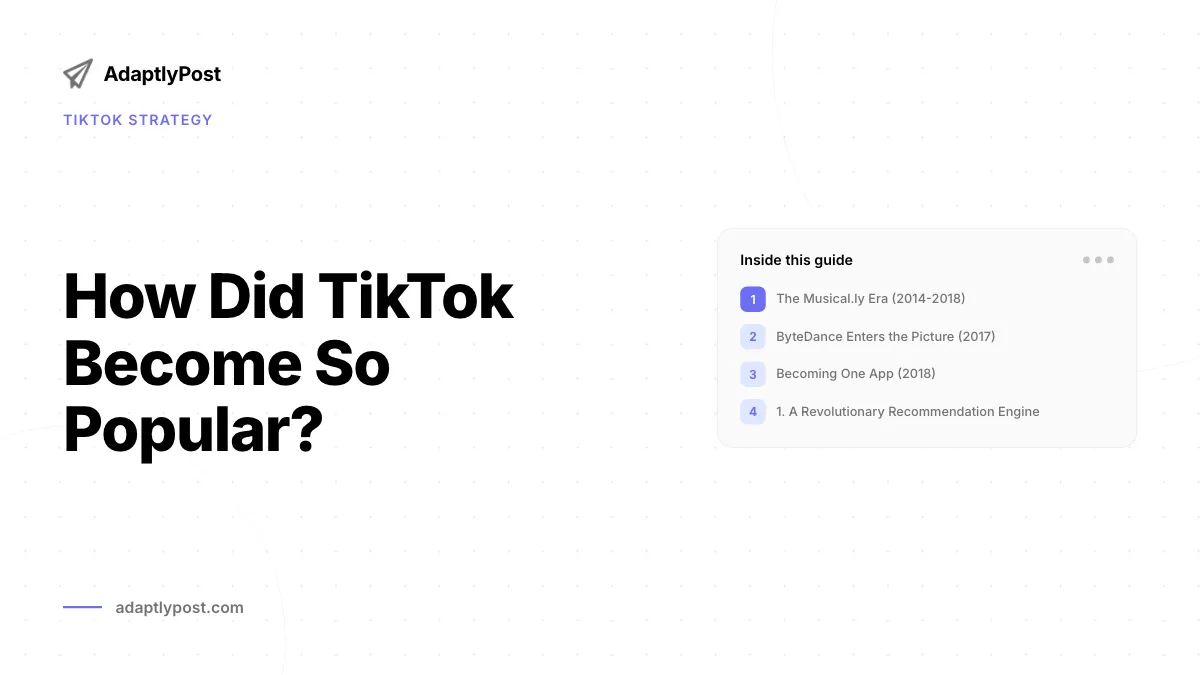
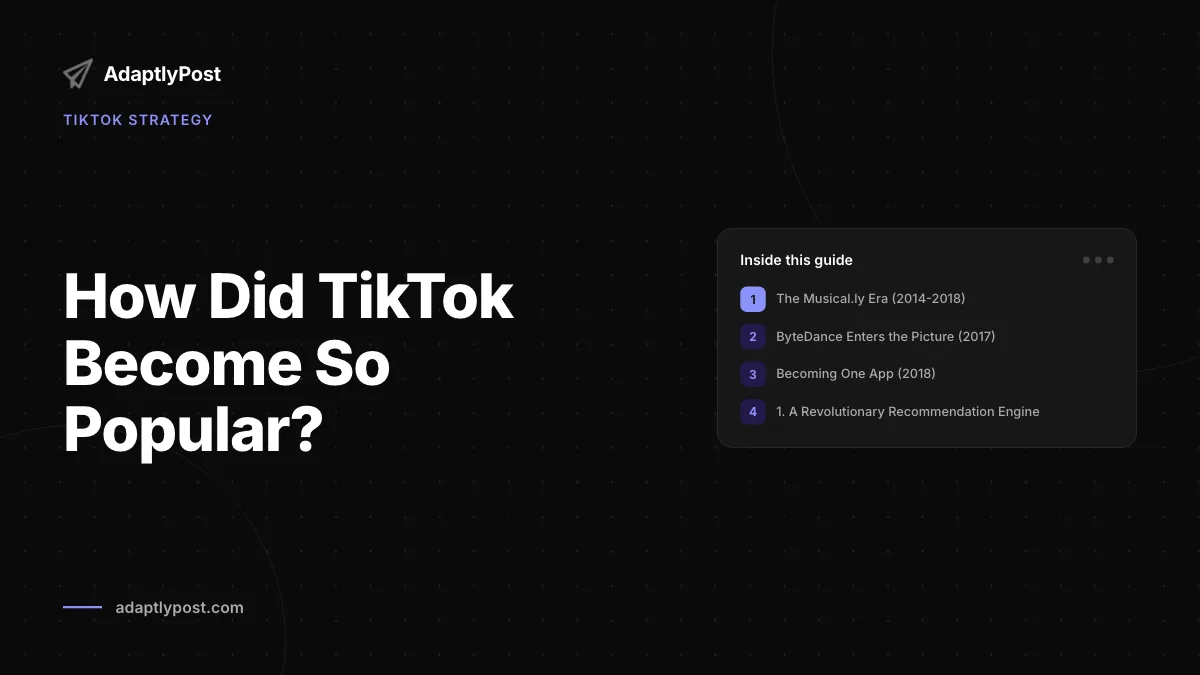
ByteDance bought Musical.ly in 2017 and folded it into one app a year later, so how did TikTok become so popular comes down to that inherited audience plus a recommendation engine that ignored follower counts.
Key strategies
TikTok's meteoric rise can be traced to five pillars:
- A recommendation algorithm that hooks users almost instantly
- Accessible creation tools that removed barriers for everyday people
- Ideal market timing aligned with the mobile video revolution
- Localized global expansion that adapted to regional cultures
- The Musical.ly acquisition that provided an immediate Western audience
From Musical.ly to TikTok: The Origin Story
The Musical.ly Era (2014-2018)
Musical.ly debuted in 2014, created by Chinese entrepreneurs Alex Zhu and Luyu Yang. The platform centered on:
- Lip-sync performances synchronized to popular tracks
- A 15-second video format tailor-made for mobile consumption
- A predominantly teen user base concentrated in the United States
- Music licensing agreements to ensure legal use of songs
ByteDance Enters the Picture (2017)
ByteDance acquired Musical.ly for $800 million in November 2017:
- It marked the largest Chinese purchase of an American social media company at that point
- The deal merged Musical.ly's established Western following with TikTok's Asian user base
- ByteDance's cutting-edge AI and recommendation engine technology came with the deal
- The result was a unified global platform with a massive head start
Becoming One App (2018)
Musical.ly was officially rebranded as TikTok in August 2018:
- Every Musical.ly account was migrated to TikTok
- The merged platform surpassed 100 million users from day one
- A single global brand identity replaced the fragmented approach
- An aggressive international expansion plan was set in motion
How rivals responded: TikTok's success spurred Instagram and YouTube to develop their own short-video products. For a comparison of these offerings, see our YouTube Shorts vs Instagram Reels analysis.
- Lip-sync videos in a 15-second format
- Predominantly teen users in the United States
- 200 million registered users by 2016-2017
- No AI-driven recommendation engine
- ByteDance's $800 million acquisition combined with its Asian user base
- AI recommendation engine bundled in from the acquisition
- Surpassed 100 million users from day one
- Single global brand with an aggressive international expansion plan
The Driving Forces Behind TikTok's Rise
1. A Revolutionary Recommendation Engine
The "For You Page" fundamentally changed content discovery:
- Machine learning recommendations driven by user behavior patterns
- No need for followers -- any video from any creator could go viral
- A level playing field where newcomers had genuine visibility
- Constant refinement based on every interaction
The mechanics behind it:
- Monitors watch duration, likes, shares, and comments
- Analyzes video metadata including audio, effects, and hashtags
- Factors in device type, language preferences, and location
- Delivers hyper-personalized feeds in real time
2. Arriving at the Perfect Moment
The Smartphone Generation:
- Mobile devices had become the primary screen for consuming content
- Shrinking attention spans made short, punchy videos ideal
- Global mobile data speeds were improving rapidly
- App store ecosystems had matured into reliable distribution channels
The Democratization of Content:
- Every pocket held a capable camera
- Editing software became usable by non-professionals
- Familiarity with social media reached an all-time high
- The creator economy was beginning to take shape

3. Frictionless Creation Tools
TikTok stripped away the complexity of video production:
- In-app editing suite packed with filters and visual effects
- Vast music library offering ready-to-use soundtracks
- Duet and collaboration modes enabling interactive content
- Templates and trend frameworks providing creative direction
- One-tap cross-platform sharing
4. Tailored Global Expansion
TikTok customized its experience for every market:
- Dedicated regional moderation teams
- Native language support paired with culturally relevant features
- Country-specific trending hashtags and community challenges
- Collaborations with local creators and regional influencers
- Adherence to local regulations and cultural norms
Growth Milestones
2016-2017: Building the Foundation
- Musical.ly surpassed 200 million registered users
- ByteDance separately developed TikTok for audiences across Asia
2018: The Unification
- Musical.ly was absorbed into TikTok as a single global product
- The combined user base crossed 100 million
2019: The Breakout Year
- Monthly active users reached 500 million by mid-year
- Content diversified well beyond music into comedy, education, and lifestyle
2020: The Pandemic Catalyst
- Downloads surged past 2 billion as COVID-19 lockdowns kept people indoors
- Home entertainment went from optional to essential
- Millions of newly homebound users began creating content
2021-2022: Crossing Into the Mainstream
- Monthly active users hit the 1 billion milestone
- Adoption spread across every age bracket
- Business, educational, and professional content gained momentum
2023-2024: Cementing Market Leadership
- Cumulative downloads exceeded 3 billion
- TikTok became the definitive social platform for Gen Z
- Its influence on music charts, fashion trends, and popular culture became undeniable
What Set TikTok Apart from Competitors
vs. YouTube
- Short-form clips rather than long-form productions
- Algorithm-powered discovery instead of subscription-driven feeds
- Mobile-native design vs. a platform rooted in desktop viewing
- Simple creation tools vs. complex production requirements
vs. Instagram
- Video-first approach vs. a photo-centric heritage
- Entertainment as the core purpose vs. lifestyle curation
- Algorithmic equal opportunity vs. reach tied to follower count
vs. Snapchat
- Publicly visible content rather than private ephemeral messaging
- Algorithm-curated feeds vs. friend-network-limited distribution
- Creator monetization pathways vs. an advertising-only revenue model
Strategic Moves That Supercharged Growth

1. Paying Creators to Join Early
- Recruited popular influencers with financial incentives to establish presence
- Encouraged cross-posting that introduced existing audiences to TikTok
- Launched creator funds to reward and retain high-quality contributors
2. Partnering with the Music Industry
- Secured licensing agreements with all major record labels
- Formed artist promotion partnerships timed around new releases
- Built music discovery features that turned TikTok into a hit-making machine
3. Engineering Virality
- Hashtag challenges invited mass participation
- Celebrity endorsements raised mainstream awareness
- Cross-channel advertising campaigns ran on TV, YouTube, and Instagram
4. Relentless Platform Innovation
- Frequent feature updates kept the experience fresh and engaging
- AR effects and creative filters expanded what users could produce
- Live streaming added real-time community interaction
- E-commerce integration opened new revenue channels
Cultural Impact and the Viral Effect
Setting Trends
TikTok became the origin point for:

AdaptlyPost
Start Your 7-Day Free Trial
All-platform analytics
Social Inbox
AI-powered assistant
- Dance crazes that crossed over into mainstream media
- Music hits discovered and amplified through the platform
- Fashion movements that reshaped retail and consumer behavior
- Slang and catchphrases adopted across younger generations
Education Goes Viral
- "EduTok" proved that learning could be genuinely entertaining
- DIY tutorials and life hack videos spread rapidly
- Expert knowledge from professionals became widely accessible
- Language lessons delivered in digestible, bite-sized clips
TikTok's creative community places a strong emphasis on proper attribution. Understanding what IB means on TikTok -- short for "inspired by" -- is key to the platform's culture of crediting original creators.
The Psychology of TikTok's Appeal
Dopamine by Design
- Infinite scrolling that sustains engagement indefinitely
- Unpredictable content variety creating a variable-reward loop
- Immediate gratification from quick bursts of entertainment
Empowering Self-Expression
- Minimal barriers to creating and sharing content
- Viral potential that motivates widespread participation
- Community formation around niche interests and shared passions
How TikTok Makes Money
Advertising Revenue
- Partnerships with major consumer brands
- Native ad placements woven seamlessly into the content feed
- E-commerce collaborations enabling in-app purchasing
The Creator Economy
- Creator funds that pay content producers directly
- Virtual gifts during live streams as a fan-to-creator revenue channel
- A marketplace connecting brands with creators for sponsored collaborations
What Other Platforms Can Learn
Put Users First
- Prioritize audience experience before optimizing for advertisers
- Lower the barriers to content creation for ordinary users
- Lead with entertainment value rather than pure utility
Invest in Algorithmic Intelligence
- Pour resources into recommendation engine technology
- Reward engagement quality over follower count
- Give every creator a fair shot at visibility regardless of audience size
Think Global, Act Local
- Adapt content and features to each regional market
- Build relationships with local creators and cultural figures
- Respect regulatory and cultural differences across geographies
Key Takeaways
- TikTok succeeded by combining perfect market timing with innovative technology and user-obsessed design
- Its recommendation algorithm leveled the playing field for content discovery and creation
- Strategic acquisitions and localized expansion turbocharged global growth
- Deep cultural awareness and trend origination drove organic viral adoption
- Competitors responded but TikTok maintained its lead through continuous innovation
- Privacy debates and regulatory scrutiny continue to present challenges
TikTok's ascent demonstrates how rapidly social media landscapes can shift when a platform genuinely understands what its users want. Its triumph rests not solely on sophisticated technology, but on cultivating an environment where creativity flourishes and anyone -- regardless of following -- can connect with an audience.
Frequently Asked Questions
How much did ByteDance pay for Musical.ly?
ByteDance acquired Musical.ly for $800 million in November 2017. The deal was the largest Chinese purchase of an American social media company at the time. It gave TikTok an established Western audience overnight.
When did Musical.ly become TikTok?
Musical.ly was officially rebranded as TikTok in August 2018. Every Musical.ly account migrated over, and the merged platform passed 100 million users from day one.
How does TikTok's algorithm decide what to show on the For You Page?
TikTok's algorithm tracks watch duration, likes, shares, and comments, then layers in video metadata like audio, effects, and hashtags. Device type, language, and location feed in too, producing a feed that updates with every interaction.
Why doesn't follower count matter much on TikTok?
The recommendation engine surfaces videos based on behavior signals rather than who a creator already has as followers. That is why a brand new account can go viral alongside accounts with millions of followers.
How many downloads has TikTok had?
Downloads passed 2 billion in 2020 as pandemic lockdowns kept people home, then crossed 3 billion by 2023-2024. That trajectory came alongside monthly active users hitting 1 billion in 2021-2022.
How is TikTok different from Instagram Reels?
TikTok takes a video-first approach built around entertainment, while Instagram grew from a photo-centric app centered on lifestyle curation. TikTok's algorithm also gives any creator an equal shot at reach, rather than favoring accounts with large followings.
How does TikTok make money?
Revenue comes from advertising, including native ads in the feed and e-commerce partnerships, plus a creator economy layer. That includes creator funds, virtual gifts during live streams, and a marketplace connecting brands with creators.
What made TikTok's creation tools easier to use than competitors?
An in-app editing suite with filters and effects, a large music library, and templates removed most of the technical barriers to producing a video. Duet and collaboration modes plus one-tap sharing rounded that out.
What does IB mean on TikTok?
IB stands for "inspired by," a tag creators use to credit whoever originated an idea, trend, or piece of content. It reflects the platform's emphasis on attribution within its creative community.
How did TikTok expand into new international markets?
TikTok built dedicated regional moderation teams, native language support, and culturally relevant features for each market. Country-specific trending hashtags, local creator partnerships, and adherence to local regulations rounded out the approach.
Put this into practice with AdaptlyPost
Was This Article Helpful?
Let us know what you think!
See us more often in Google
One click marks AdaptlyPost as a preferred source, so our articles sit higher in your Top Stories, AI Mode, and AI Overviews.
Before you go...
AdaptlyPost
Schedule your content across all platforms
Manage all your social media accounts in one place with AdaptlyPost.
All-platform analytics
Social Inbox
AI-powered assistant
Related Articles
How to Get More TikTok Views: Key Strategies
Views start on the profile page, not at the record button. How to get more TikTok views through username, bio, hooks, sounds, and posting data.
Best Time to Post Reels on Instagram and TikTok
Instagram Reels and TikTok reward different windows. The best time to post reels on each, plus how to read your own analytics instead of averages.
8 Proven TikTok Bio Templates That Convert Profile Visitors Into Followers
Eighty characters decide whether a profile visitor follows. Eight TikTok bio templates with worked examples, plus the link and keyword rules that apply.