
TL;DR, Quick Answer
5 min readDemand generation is the marketing strategy of creating awareness and interest in your brand before prospects are ready to buy. It builds the pipeline that lead generation later converts.
What Is Demand Generation?
Demand generation is a comprehensive marketing strategy focused on creating awareness, education, and interest in your brand, product, or category among target audiences. It encompasses all the activities that introduce prospects to your brand and build enough trust and understanding that they eventually seek you out when they are ready to buy.
Unlike lead generation, which focuses on capturing contact information from interested prospects, demand generation operates earlier in the buyer journey. It creates the conditions under which leads form naturally rather than through forced form fills.
Why Demand Generation Matters
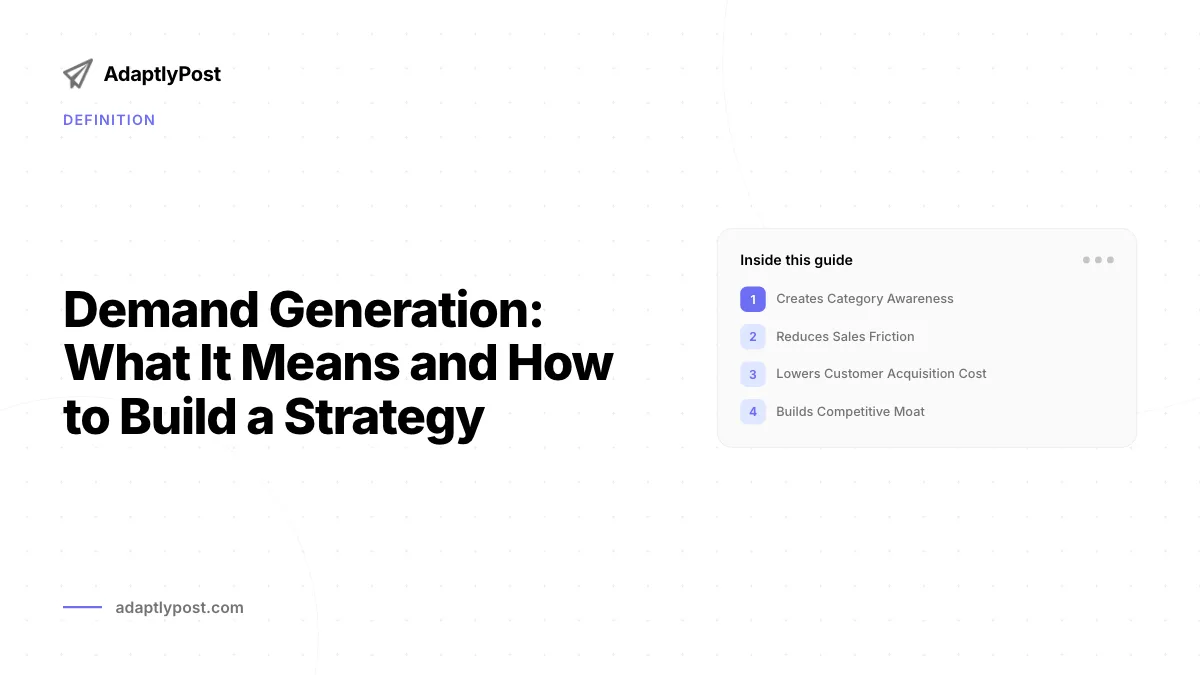
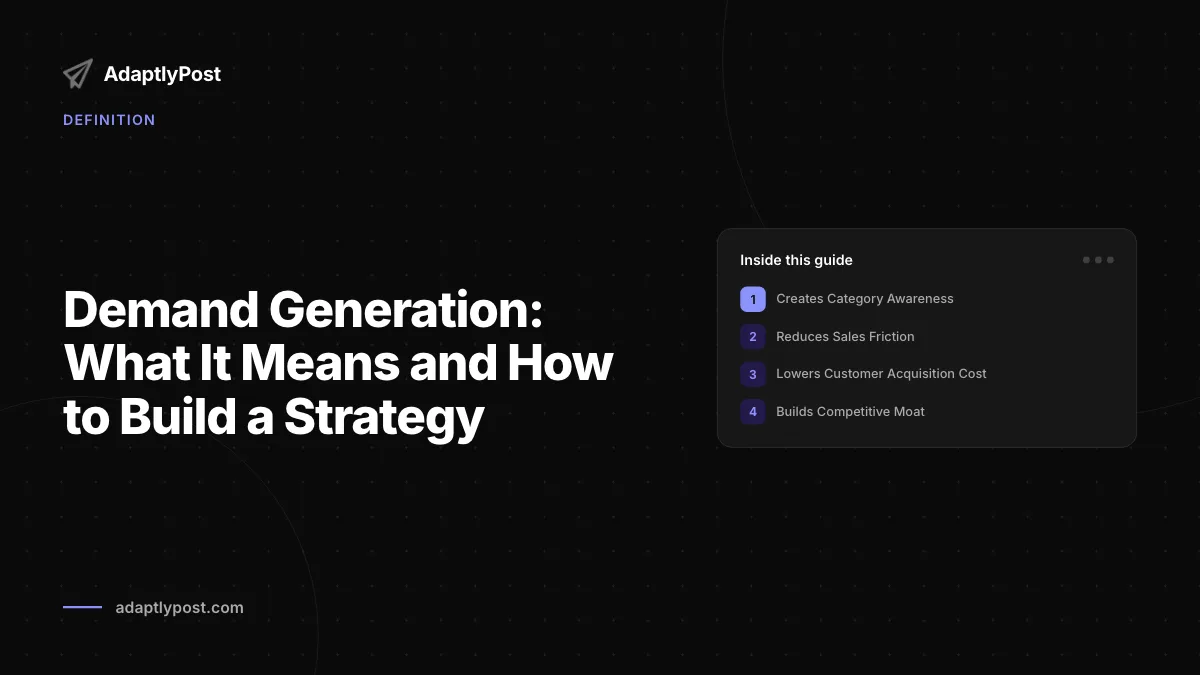
Creates Category Awareness
Many prospects do not know they have a problem your product solves, or they do not know your category of solution exists. Demand gen educates the market and expands the pool of potential buyers.
Reduces Sales Friction
Prospects who discover your brand through educational content arrive at sales conversations already informed and predisposed to trust you. This shortens sales cycles and increases win rates.
Lowers Customer Acquisition Cost
Organic demand gen activities like content marketing and social media compound over time, reducing your reliance on expensive paid acquisition channels.
Builds Competitive Moat
A brand with strong demand gen becomes the default reference in its category. This top-of-mind positioning is difficult for competitors to replicate.
- Prospects do not know your category or your solution exists
- Sales conversations start cold, so cycles run longer
- Growth depends on expensive paid acquisition
- Competitors are just as easy to find as you are
- Educational content expands the pool of buyers who recognize their problem
- Prospects arrive informed and predisposed to trust you
- Organic content compounds and reduces reliance on paid channels
- Your brand becomes the default reference in the category
Core Components of Demand Generation
| Component | Purpose | Examples |
|---|---|---|
| Content marketing | Educate and inform | Blog posts, podcasts, videos, research reports |
| Social media | Distribute and engage | LinkedIn posts, Twitter threads, Instagram content |
| SEO | Capture search intent | Keyword-optimized articles, resource pages |
| Paid media | Amplify reach | Social ads, display ads, sponsored content |
| Events | Build relationships | Webinars, conferences, community meetups |
| Email nurture | Maintain engagement | Newsletters, drip campaigns, updates |
| PR and partnerships | Expand credibility | Media features, co-marketing, guest contributions |
How to Build a Demand Generation Strategy

Step 1: Understand Your Buyer
Create detailed buyer personas that map out your ideal customer's challenges, goals, information consumption habits, and decision-making process.
Step 2: Develop a Content Engine
Content is the fuel of demand gen. Build a repeatable process for producing educational, entertaining, or perspective-driven content that addresses your buyer's questions and challenges.
Step 3: Choose Distribution Channels
Focus on two to three channels where your audience is most active. Spread across too many channels and you dilute impact. Go deep on a few for maximum effect.
Step 4: Build Brand and Thought Leadership
Position key team members as industry experts. Their personal brands amplify your company brand and create human connections that corporate accounts cannot match.

Step 5: Measure What Matters
Track leading indicators like brand search volume, social engagement, content consumption, and share of voice. Also track lagging indicators like pipeline influenced, self-reported attribution, and revenue from demand gen sources.
Step 6: Align with Sales
Ensure sales understands the demand gen approach and is equipped to handle inbound prospects differently from cold outreach targets. Shared definitions and feedback loops between marketing and sales are essential.
Demand Generation vs. Lead Generation
Demand generation and lead generation are not competing strategies, they are complementary:

AdaptlyPost
Start Your 7-Day Free Trial
All-platform analytics
Social Inbox
AI-powered assistant
- Demand generation creates the interest, awareness, and trust that make people want to learn more about your solution.
- Lead generation captures the information of people who are ready to engage more directly with your sales process.
The best marketing programs use demand gen to warm up the market and lead gen to convert that warmth into actionable pipeline.
Related Terms
- Demand Gen Campaigns: specific campaign types within a demand gen strategy
- Demand Waterfall: the framework for tracking demand through funnel stages
- Customer Acquisition Cost: the cost metric demand gen helps reduce
- Distribution Channels: pathways for reaching audiences
Frequently Asked Questions
How is demand generation measured?
Key metrics include brand search volume growth, organic traffic, social media engagement, content shares, share of voice, pipeline influenced by demand gen content, and self-reported attribution data from new customers.
Does demand generation work for B2C companies?
Yes. While the term is most commonly associated with B2B marketing, B2C brands use demand gen principles when they educate consumers about new product categories, build brand loyalty through content, or create cultural relevance through social media.
How long does it take for demand generation to produce results?
Expect three to twelve months of consistent effort before seeing significant pipeline impact. Earlier signals like increased engagement, brand mentions, and organic traffic typically appear within the first one to three months.
What is the relationship between demand generation and brand marketing?
Brand marketing is a subset of demand generation. Brand activities build recognition and trust, which are foundational to generating demand. Demand generation takes brand a step further by connecting it to measurable business outcomes.
Can demand generation work without a large budget?
Yes. Many of the most effective demand gen tactics, organic social media, blogging, community participation, and thought leadership, require time and expertise rather than large budgets.
What content formats work best for demand generation?
Blog posts, podcasts, videos, and research reports make up the core of most demand gen content marketing. Social posts on LinkedIn, Twitter, and Instagram distribute that content, and webinars or newsletters keep prospects engaged over time. The right mix depends on where your buyer already spends attention.
How many channels should a demand generation strategy focus on?
Two to three channels where your audience is already active work better than spreading effort across many. Going deep on a few channels concentrates impact, while covering too many dilutes it. Pick the channels your buyer personas actually use and commit to them.
What role does sales play in demand generation?
Sales needs to understand the demand gen approach and treat inbound prospects differently from cold outreach targets. Shared definitions and feedback loops between marketing and sales keep both teams aligned on what counts as a qualified opportunity. Without that alignment, a warm prospect can get handled the same way as a cold one, and the trust demand gen built goes to waste.
How does demand generation lower customer acquisition cost?
Organic demand gen activities like content marketing and social media compound over time instead of requiring continuous spend. As they build up, they reduce how much a company needs to rely on expensive paid acquisition channels. The upfront investment is time and expertise rather than ad budget.
What is the first step in building a demand generation strategy?
The first step is understanding the buyer. That means building detailed personas that map out their challenges, goals, information habits, and decision-making process. That foundation shapes every later step, from the content engine to channel selection.
Build Demand Through Social Media
AdaptlyPost helps marketing teams create consistent, high-quality social media presences that build brand awareness and generate demand over time. Start building your demand gen engine with AdaptlyPost.
Was This Article Helpful?
Let us know what you think!
See us more often in Google
One click marks AdaptlyPost as a preferred source, so our articles sit higher in your Top Stories, AI Mode, and AI Overviews.
Before you go...
AdaptlyPost
Schedule your content across all platforms
Manage all your social media accounts in one place with AdaptlyPost.
All-platform analytics
Social Inbox
AI-powered assistant
Related Glossary Terms
Turn Recognition Into Demand by Building Brand Awareness
Recognition sits at one end, top-of-mind at the other. How brand awareness is built on social, which metrics track it, and what actually moves them.
Digital Marketing: What It Means and How to Succeed
Learn what digital marketing means, the key channels and strategies it includes, and how to build an effective digital marketing plan.
Distribution Channels Meaning: A Complete Guide
Learn what distribution channels mean in marketing, the different types, how to choose the right ones, and strategies for maximizing reach.
Related Articles
A Practical Overview - LinkedIn and Marketing
Company Pages, employee advocacy, ads, and comments. Which LinkedIn marketing components generate B2B leads, and the order worth building them in.


Choose Top Analytics Metrics Across the Funnel
Awareness, engagement, and conversion numbers rarely tell one story. A metrics analysis example showing which figures to pair and which to ignore.
Useful Context - Site Audience Analysis
Guessing who you are talking to wastes budget. What site audience analysis covers, the tools that supply the data, and how it sharpens content.